# THE CO-LIVING MATRIX
## Profile Marketing & Promotional Use Terms
**Effective Date:** August 23, 2026
By creating, maintaining, or submitting a profile on The Co-Living Matrix platform (“Platform”), you agree to the following terms regarding the use of your profile information, photographs, and other content for marketing and promotional purposes.
### 1. Permission to Use Profile Content
By uploading, submitting, or publishing content to The Co-Living Matrix, you grant The Co-Living Matrix a non-exclusive, royalty-free license to use, reproduce, display, publish, format, resize, crop, and distribute certain content from your public or match-facing profile for legitimate business, advertising, promotional, educational, and marketing purposes.
This permission may include:
* Profile photographs uploaded by you;
* Photographs of rooms, homes, or rental spaces uploaded by you;
* Your first name or display name;
* Your general location, such as city, state, or metropolitan area;
* Whether you are seeking a roommate, offering a room, or providing housing;
* Non-sensitive portions of your profile that describe roommate or housing preferences; and
* Testimonials, reviews, or feedback that you voluntarily submit for promotional use.
### 2. Where Profile Content May Appear
You understand and agree that authorized profile content may be featured in marketing or promotional materials for The Co-Living Matrix, including the Company's website, social media accounts, digital advertisements, printed advertisements, flyers, brochures, event materials, presentations, emails, promotional videos, and other Company-operated marketing channels.
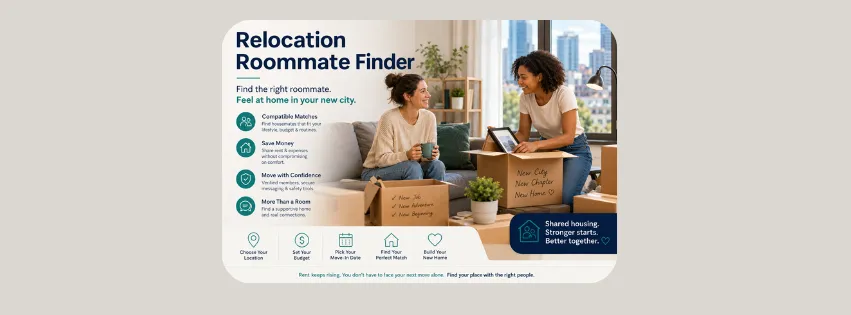
For example, The Co-Living Matrix may advertise that individuals are currently seeking roommates in a particular city and may include profile photographs or other authorized profile information in that advertisement.
### 3. No Sale of Your Profile or Likeness
Permission under these Terms allows The Co-Living Matrix to market and promote its Platform and services. It does **not** transfer ownership of your photographs or other original content to The Co-Living Matrix.
The Co-Living Matrix will not sell your photograph, likeness, or individual profile to an unrelated third party for that third party's independent advertising purposes merely because you agreed to these Terms.
### 4. Information Excluded From Marketing
Unless you separately and expressly authorize it, The Co-Living Matrix will not use the following information in public marketing materials:
* Government-issued identification documents;
* Identity-verification documentation;
* Social Security numbers;
* Full dates of birth;
* Background-check reports or detailed results;
* Private messages or conversations between users;
* Financial or payment information;
* Exact residential addresses that are not intentionally published as part of a housing listing;
* Private case-management communications; or
* Other information designated by the Platform as confidential or sensitive.
### 5. User Representations Regarding Photographs
You represent that you own, created, or otherwise have sufficient permission to upload and authorize The Co-Living Matrix to use any photograph or other content you submit.
You agree not to upload photographs or content that violate another person's copyright, privacy, publicity, or other legal rights.
If a photograph prominently depicts another identifiable person, you represent that you have permission to upload and use that photograph when such permission is legally required.
### 6. No Compensation for Promotional Use
Unless The Co-Living Matrix separately agrees otherwise in writing, you understand that you will not receive royalties, advertising revenue, or other compensation because your authorized profile content appears in marketing or promotional materials for The Co-Living Matrix.
### 7. Editing and Formatting
The Co-Living Matrix may make reasonable technical or formatting modifications to authorized content for marketing purposes, including cropping, resizing, adding a Platform-branded frame, adding text identifying the applicable city or housing category, or combining the content with other Platform marketing materials.
The Company will not intentionally alter a user's photograph or profile information in a manner that materially misrepresents that user's identity, housing availability, or statements.
### 8. Withdrawal of Marketing Permission
You may request that The Co-Living Matrix stop using your profile content in **new marketing materials** by contacting the Company through its designated support or privacy contact method.
Upon receiving and processing a valid request, The Co-Living Matrix will discontinue new promotional uses of the user's profile content within a commercially reasonable period.
You understand that withdrawal may not require The Co-Living Matrix to recall, destroy, or remove materials that were already printed, distributed, published, or incorporated into completed campaigns before the request was processed, where removal is impractical or legally unnecessary.
### 9. Account Deletion
Deleting your account does not automatically require the immediate recall of marketing materials that were lawfully created or distributed while your authorization was active. However, The Co-Living Matrix will not intentionally use a deleted user's profile content in new advertisements after the Company's systems have reasonably processed the deletion and associated marketing withdrawal.
### 10. Platform Safety and Privacy
Authorization to use profile content for marketing does not authorize The Co-Living Matrix to publicly disclose confidential information obtained through identity verification, safety screening, background screening, private communications, or case-management services.
### 11. Changes to These Terms
The Co-Living Matrix may update these Profile Marketing & Promotional Use Terms from time to time. Material changes will be communicated in accordance with the Platform's Terms of Service and applicable law.
### 12. Acknowledgment and Consent
By selecting **“I Agree,” “Create Account,” “Submit Profile,”** or another clearly identified acceptance mechanism associated with these Terms, you acknowledge that you have read and agree to these Profile Marketing & Promotional Use Terms, including the authorization for The Co-Living Matrix to use qualifying profile photographs and profile information to advertise and promote the Platform.
# THE CO-LIVING MATRIX
## PRIVACY POLICY
**Effective Date: August 23, 2026**
**Last Updated: August 23, 2026**
The Co-Living Matrix (“The Co-Living Matrix,” “Company,” “we,” “us,” or “our”) respects the privacy of our users. This Privacy Policy explains how we collect, use, disclose, store, and otherwise process information when you access or use The Co-Living Matrix website, platform, services, applications, or related features (collectively, the “Platform”).
The Co-Living Matrix is currently operating as a **Minimum Viable Product (“MVP”)** and is undergoing continued development, testing, improvement, and expansion.
By creating an account or using the Platform, you acknowledge the privacy practices described in this Privacy Policy.
---
# 1. INFORMATION WE COLLECT
Depending on how you use the Platform, we may collect the following categories of information.
## A. Account Information
When you create or maintain an account, we may collect:
* Name or display name;
* Email address;
* Telephone number;
* Age or date-of-birth information where required;
* General location;
* Account credentials;
* Profile type;
* Roommate or housing status; and
* Other information necessary to create and maintain your account.
## B. Profile Information
Users may voluntarily provide information to create roommate, housing, or rental profiles, including:
* Profile photographs;
* Photographs of rooms, homes, or rental spaces;
* General location;
* Housing preferences;
* Roommate preferences;
* Lifestyle preferences;
* Move-in or availability information;
* Housing descriptions;
* Biographical information; and
* Other information voluntarily entered into a profile.
Information included in your profile may be displayed to other users according to the functionality, privacy settings, matching features, and current development phase of the Platform.
## C. Identity Verification and Safety Information
The Co-Living Matrix may require users to complete identity verification or other verification procedures to promote the safety, integrity, and authenticity of the Platform.
The Co-Living Matrix may use third-party providers to perform services such as:
* Identity verification;
* Background screening;
* Fraud prevention;
* Account authentication; and
* Other safety-related services.
Depending on the service requested, information may be provided directly to an applicable third-party provider.
The Co-Living Matrix may receive verification status, screening results, eligibility indicators, or other information necessary to administer Platform safety features.
Government-issued identification documents, identity-verification documents, and detailed background-screening information are **not considered marketing content** and will not be publicly displayed in advertisements merely because you use the Platform.
## D. Communications
When you communicate through the Platform or contact The Co-Living Matrix, we may collect and maintain information relating to those communications.
This may include:
* Messages between users;
* Messages sent to customer support;
* Reports regarding other users;
* Safety complaints;
* Feedback;
* Technical support requests; and
* Communications regarding services provided through the Platform.
Private user-to-user messages will not be publicly disclosed for marketing purposes without additional authorization.
## E. Payment Information
If paid services are offered, payment information may be processed by third-party payment processors.
The Co-Living Matrix may receive information such as:
* Payment status;
* Transaction amount;
* Subscription status;
* Transaction identifiers; and
* Limited billing information.
We generally do not receive or store complete payment-card numbers when payment information is processed directly by a third-party payment provider.
## F. Technical and Usage Information
When you access the Platform, certain information may be collected automatically, including:
* IP address;
* Browser type;
* Device information;
* Operating system;
* Pages viewed;
* Features used;
* Referral sources;
* Approximate location derived from technical information;
* Login activity;
* Cookies or similar technologies; and
* Information regarding interactions with the Platform.
We may use this information for security, analytics, fraud prevention, Platform improvement, troubleshooting, and marketing measurement.
---
# 2. HOW WE USE INFORMATION
The Co-Living Matrix may use information collected through the Platform to:
* Create and maintain user accounts;
* Provide roommate and housing matching services;
* Display appropriate profile information to other users;
* Facilitate communications between users;
* Operate search and matching functionality;
* Verify user identities and account authenticity;
* Provide safety and screening features;
* Detect or investigate fraud, abuse, harassment, impersonation, or misuse;
* Respond to user questions and support requests;
* Improve Platform functionality;
* Analyze Platform usage;
* Develop new products, services, and features;
* Test MVP and Phase Update functionality;
* Communicate Platform updates;
* Send administrative or service-related communications;
* Market and promote The Co-Living Matrix;
* Comply with legal obligations;
* Enforce our Terms of Service and other agreements; and
* Protect users, the Company, and others.
---
# 3. PROFILE PHOTOS, PROFILE INFORMATION, AND MARKETING
## Profile Content May Be Used to Promote The Co-Living Matrix
The Co-Living Matrix may use and share certain content that users voluntarily upload to their profiles for the purpose of **advertising, marketing, and promoting The Co-Living Matrix and its services.**
Subject to applicable law and any required consent, this content may include:
* **Profile photographs;**
* Photographs of rooms or housing offered through the Platform;
* First name or display name;
* General city, state, or metropolitan area;
* Whether a user is seeking a roommate or offering a room;
* General housing availability; and
* Limited non-sensitive profile information relevant to a marketing campaign.
For example, The Co-Living Matrix may create an advertisement stating that individuals are currently seeking roommates in a particular city and may include qualifying photographs from user profiles in that advertisement.
## Where Profile Content May Appear
Authorized profile photographs or qualifying profile content may appear in:
* The Co-Living Matrix website;
* The Company's social-media accounts;
* Social-media advertisements;
* Digital advertisements;
* Search advertisements;
* Promotional emails;
* Flyers;
* Brochures;
* Event materials;
* Presentations;
* Promotional videos;
* Printed advertisements; and
* Other advertising or promotional materials created for The Co-Living Matrix.
Use of a user's photograph for these purposes does **not transfer ownership of the photograph to The Co-Living Matrix.**
The Co-Living Matrix does not sell a user's individual photograph or likeness to unrelated businesses for those businesses' independent advertising purposes merely because the user maintains a Platform account.
## Withdrawal of Marketing Permission
Users may contact The Co-Living Matrix to request that their profile photograph no longer be included in **new marketing materials**.
After a valid request is received and reasonably processed, The Co-Living Matrix will discontinue intentional new promotional uses of that user's profile photograph.
Removal requests may not apply retroactively to printed, previously distributed, archived, already-published, or completed marketing materials where removal is impractical or not legally required.
---
# 4. INFORMATION WE DO NOT USE FOR PUBLIC MARKETING
Unless you provide separate authorization or disclosure is otherwise permitted or required by law, The Co-Living Matrix will not intentionally publish the following information in public advertisements:
* Government-issued identification documents;
* Social Security numbers;
* Full dates of birth;
* Financial account information;
* Full payment-card information;
* Detailed background-check reports;
* Identity-verification documents;
* Private user-to-user messages;
* Private case-management communications;
* Exact residential addresses that have not intentionally been made publicly available as part of a housing listing; or
* Other information designated by the Platform as confidential or sensitive.
---
# 5. VERIFICATION STATUS, PROFILE PERCENTAGES, AND BACKGROUND CHECKS
The Co-Living Matrix may display a percentage, badge, indicator, or similar designation on a user's profile to help other users understand verification steps associated with that account.
**Verification percentages are verification-status indicators. They are NOT safety ratings, risk scores, endorsements, recommendations, guarantees of character, or guarantees that another user is suitable to live with.**
Users are responsible for reviewing verification information displayed on a profile before communicating with, meeting, renting to, renting from, living with, or entering into any housing or financial arrangement with another user.
## A. 70% PROFILE — IDENTITY VERIFIED
A profile displaying a **70% verification status means that the user has completed the identity-verification requirement designated by The Co-Living Matrix for that status.**
### IMPORTANT: A 70% PROFILE DOES NOT MEAN A BACKGROUND CHECK HAS BEEN COMPLETED.
A 70% status should not be interpreted as meaning that:
* A formal criminal background check has been completed;
* A criminal background check has been passed;
* A sex-offender registry search has been completed;
* A civil-record search has been completed;
* An eviction or rental-history search has been completed;
* Employment has been verified;
* Income has been verified;
* Every statement made by the user has been independently verified;
* The individual has been determined to be safe;
* The individual has been approved or recommended by The Co-Living Matrix; or
* The individual is suitable for a particular roommate, rental, or housing arrangement.
**A user displaying a 70% verification status has completed the designated identity-verification step but still requires a formal background check if a user wishes to obtain the additional information provided through background screening.**
Identity verification and formal background screening are separate processes.
## B. 0% PROFILE — NOT FULLY VERIFIED
A profile displaying a **0% verification status indicates that the account has not completed the verification requirements necessary to receive a verified status through The Co-Living Matrix.**
A 0% status provides visible notice that you are viewing or interacting with an account that **has not been fully verified through the Platform's applicable verification procedures.**
If you voluntarily choose to communicate with, meet, provide housing to, seek housing from, exchange personal information with, send money to, receive money from, or otherwise engage with a profile displaying a 0% verification status, you acknowledge and understand that:
* The profile's 0% verification status was visibly available for you to review;
* You were provided an opportunity to evaluate the profile's verification status yourself;
* The account has not completed the Platform's applicable verification requirements;
* The Co-Living Matrix has not represented that the individual's identity or background has been fully verified;
* You have the ability and responsibility to review the profile and displayed verification information before deciding whether to proceed;
* You should independently evaluate the individual before entering into a roommate, rental, housing, financial, or other arrangement; and
* **You knowingly and voluntarily accept the additional risks associated with choosing to interact with an account displaying a 0% verification status.**
Choosing to interact with a 0% profile does not transform that account into a verified account and does not constitute a representation by The Co-Living Matrix that the individual is safe, legitimate, trustworthy, reliable, or suitable.
Nothing in this Privacy Policy is intended to waive any consumer right, statutory protection, legal duty, or liability that cannot lawfully be waived.
## C. USERS ARE RESPONSIBLE FOR REVIEWING VERIFICATION STATUS
The Co-Living Matrix makes verification information available to assist users in making informed decisions.
Before engaging with another user, you are responsible for reviewing available information, including:
* Profile information;
* Photographs;
* Verification percentage;
* Verification indicators;
* Background-screening status, if displayed;
* Housing information; and
* Other information made available through the Platform.
**Do not assume that simply because an account appears on The Co-Living Matrix, the individual has completed identity verification or a formal background check.**
## D. VERIFICATION DOES NOT GUARANTEE SAFETY
No identity-verification or background-screening system can guarantee that an individual is safe.
Records may be incomplete, inaccurate, outdated, unavailable, incorrectly associated with an individual, or outside the scope of a particular search.
An individual may also engage in conduct that has never resulted in a criminal charge, conviction, court record, or other searchable record.
Accordingly, **The Co-Living Matrix does not guarantee the safety, character, reliability, truthfulness, financial condition, criminal history, compatibility, housing conditions, or suitability of any user.**
Users should exercise independent judgment and appropriate precautions before meeting or entering into housing arrangements with another person.
---
# 6. IDENTITY VERIFICATION AND INCOMPLETE ACCOUNTS
To promote the safety, integrity, and authenticity of The Co-Living Matrix community, users may be required to complete identity verification or other verification procedures established by The Co-Living Matrix.
By creating and maintaining an account, you understand and acknowledge that:
* The Co-Living Matrix may require identity, email, telephone, profile, housing, or other verification;
* Certain Platform features may be unavailable until verification is completed;
* Users are responsible for providing accurate and complete information;
* The Co-Living Matrix may establish reasonable deadlines for completing required verification;
* **Failure to complete required verification within the timeframe established by The Co-Living Matrix may result in restriction, suspension, deactivation, or deletion of your account and profile;**
* Accounts containing incomplete, inaccurate, fraudulent, misleading, or unverifiable information may be restricted, suspended, deactivated, or deleted; and
* The Co-Living Matrix may require additional or renewed verification when reasonably necessary.
Where appropriate, The Co-Living Matrix may provide notice or an opportunity to complete verification before deleting an account.
However, The Co-Living Matrix reserves the right to immediately restrict, suspend, deactivate, or remove an account when reasonably necessary to address:
* Suspected fraud;
* Impersonation;
* Unlawful activity;
* Safety concerns;
* Suspected scams;
* Misrepresentation;
* Violations of our Terms of Service; or
* Risks to users, the Company, or the Platform.
---
# 7. HOW WE SHARE INFORMATION
The Co-Living Matrix may disclose information in the following circumstances.
## A. Other Platform Users
Information included in your roommate or housing profile may be made available to other users as necessary to provide matching, communication, and housing-related features.
## B. Service Providers
We may provide information to companies performing services on our behalf, including providers of:
* Website hosting;
* Cloud storage;
* Identity verification;
* Background screening;
* Payment processing;
* Email delivery;
* Customer support;
* Analytics;
* Security;
* Fraud prevention; and
* Technology infrastructure.
## C. Advertising and Marketing
As explained in this Privacy Policy, qualifying profile photographs and limited non-sensitive profile information may be displayed or shared through advertising and marketing channels for purposes of promoting The Co-Living Matrix, subject to applicable law and any required consent.
## D. Legal and Safety Disclosures
We may disclose information when we reasonably believe disclosure is necessary to:
* Comply with applicable law;
* Respond to a subpoena, court order, warrant, or other valid legal process;
* Protect the rights or property of The Co-Living Matrix;
* Investigate suspected fraud or unlawful activity;
* Enforce our agreements;
* Address threats to user or public safety; or
* Protect the rights, safety, or security of users or others.
## E. Business Transactions
If The Co-Living Matrix is involved in a merger, acquisition, financing, restructuring, bankruptcy, sale of assets, or similar transaction, user information may be disclosed or transferred as part of that transaction, subject to applicable law.
---
# 8. WE DO NOT SELL PERSONAL INFORMATION FOR MONEY
The Co-Living Matrix does not sell personal information for monetary compensation simply because an individual creates an account.
Certain privacy laws define terms such as “sale,” “sharing,” or “targeted advertising” more broadly than an ordinary sale for money.
Where applicable, users may have additional rights regarding these practices.
---
# 9. COOKIES, ANALYTICS, AND SIMILAR TECHNOLOGIES
The Platform may use cookies, pixels, analytics tools, and similar technologies to:
* Maintain accounts;
* Keep users logged in;
* Remember preferences;
* Measure Platform performance;
* Understand how users interact with the Platform;
* Prevent fraud;
* Maintain security;
* Improve services;
* Troubleshoot technical issues; and
* Measure advertising effectiveness.
Third-party services may separately collect information according to their own privacy policies.
---
# 10. DATA SECURITY
The Co-Living Matrix uses reasonable administrative, technical, and organizational safeguards designed to protect information against unauthorized access, loss, misuse, alteration, or disclosure.
However, no internet-based platform, database, electronic communication, identity-verification process, background-screening system, or electronic transmission can be guaranteed to be completely secure.
---
# 11. DATA RETENTION
We may retain personal information for as long as reasonably necessary to:
* Maintain accounts;
* Provide Platform services;
* Complete transactions;
* Resolve disputes;
* Investigate complaints;
* Prevent fraud and abuse;
* Maintain Platform security;
* Comply with legal obligations;
* Enforce agreements; and
* Maintain appropriate business records.
If an account is deleted, including for failure to complete verification, The Co-Living Matrix may retain certain information when reasonably necessary or legally permitted for:
* Security;
* Fraud prevention;
* Preventing abuse of the Platform;
* Dispute resolution;
* Legal compliance;
* Responding to legal claims;
* Enforcement of agreements; and
* Maintenance of appropriate business records.
---
# 12. ACCOUNT DELETION AND PRIVACY REQUESTS
Users may request account deletion or make other privacy requests by contacting The Co-Living Matrix.
Deleting an account may not require deletion of information that we are legally permitted or required to retain.
Account deletion also may not require the recall of advertisements or marketing materials lawfully created or distributed before a deletion or marketing-withdrawal request was processed.
However, The Co-Living Matrix will discontinue intentional use of a deleted user's profile photograph in new marketing campaigns after the applicable request has been reasonably processed.
---
# 13. STATE PRIVACY RIGHTS
Depending on your state of residence, applicable privacy laws may provide certain rights regarding your personal information.
These rights may include the right to:
* Request access to personal information;
* Correct inaccurate information;
* Request deletion of certain information;
* Obtain a copy of certain personal information;
* Obtain information regarding certain disclosures;
* Opt out of certain targeted advertising, sale, or sharing where applicable; and
* Appeal certain privacy decisions.
Rights vary by jurisdiction and may be subject to exceptions.
We may verify your identity before processing certain privacy requests.
Nothing in this Privacy Policy is intended to limit rights provided under applicable law.
---
# 14. CHILDREN'S PRIVACY
The Co-Living Matrix is intended for adults and is not intended for individuals under the age of 18 to independently create roommate, rental, or housing profiles.
Users must be at least 18 years old to independently create an account unless the Platform expressly provides otherwise in compliance with applicable law.
If we learn that an individual under 18 has improperly created an account or submitted personal information, we may restrict or remove the account and associated information as appropriate.
---
# 15. THIRD-PARTY SERVICES
The Platform may contain links to or integrations with third-party websites, verification providers, background-screening services, payment providers, social-media platforms, or other services.
Those third parties maintain their own privacy practices.
The Co-Living Matrix is not responsible for the privacy practices of independent third parties that we do not control.
Users should review applicable third-party privacy policies before providing information directly to those providers.
---
# 16. USER RESPONSIBILITY AND PERSONAL SAFETY
The Co-Living Matrix facilitates connections between individuals seeking roommates, housing, or related opportunities.
Users remain responsible for exercising reasonable judgment before interacting with another person.
Users should consider:
* Reviewing the person's verification status;
* Reviewing whether identity verification has been completed;
* Requesting or completing an appropriate background screening;
* Communicating through the Platform before providing sensitive information;
* Meeting initially in an appropriate public setting when feasible;
* Independently verifying housing arrangements;
* Avoiding unnecessary disclosure of financial or identity information; and
* Using independent judgment before signing leases, transferring money, moving into a residence, or allowing another person to move into a residence.
**The availability of a profile on The Co-Living Matrix does not constitute an endorsement, recommendation, or guarantee of that individual.**
---
# 17. MVP STATUS AND CONTINUED PLATFORM DEVELOPMENT
The Co-Living Matrix is currently operating as a **Minimum Viable Product (“MVP”).**
The Platform is an early-stage product undergoing continued development, testing, improvement, and expansion.
By creating an account or using the Platform during its MVP stage, you acknowledge and understand that:
* The Platform is continuing to be developed;
* Certain features may still be in testing or development;
* Features, services, verification processes, safety tools, matching functions, profile functions, user-interface elements, and other capabilities may be added, removed, modified, expanded, or replaced;
* The Co-Living Matrix intends to release additional functionality through future development phases (“Phase Updates”);
* Features available during the MVP may not represent the final functionality, appearance, policies, or design of The Co-Living Matrix;
* Verification percentages, verification procedures, background-screening options, profile-completion requirements, matching features, safety features, and other functionality may evolve as additional phases are developed;
* Temporary errors, interruptions, bugs, incomplete functionality, technical limitations, or changes may occur during development; and
* The Platform may change substantially as feedback is received and additional phases are released.
Users acknowledge that they are choosing to use an evolving MVP rather than a final, fully developed version of the Platform.
---
# 18. PHASE UPDATES AND CHANGES TO OUR TERMS AND POLICIES
As The Co-Living Matrix develops beyond its MVP, our business practices, Platform features, verification procedures, safety features, services, and legal requirements may change.
Accordingly, The Co-Living Matrix may modify or update its:
* Privacy Policy;
* Terms of Service;
* Verification policies;
* Safety policies;
* Community standards;
* Marketing practices;
* Background-screening procedures;
* Profile requirements; and
* Other Platform rules or policies.
Updates may be made to reflect:
* New Platform phases;
* New features;
* User feedback;
* Changes to verification processes;
* Safety improvements;
* Security improvements;
* New technology;
* Changes in business operations;
* Changes to third-party providers; or
* Changes in applicable laws or regulations.
The current version of applicable policies will identify an effective date or “Last Updated” date where appropriate.
## Notice of Material Changes
When required by applicable law, The Co-Living Matrix will provide appropriate notice of material changes to its Privacy Policy, Terms of Service, or other applicable policies.
Notice may be provided through:
* The Platform;
* Email;
* Account notifications;
* Website notices; or
* Another reasonable method.
Where applicable law requires renewed or affirmative consent to a material change, The Co-Living Matrix will request such consent before applying the change in a manner requiring consent.
Continued use of the Platform following the effective date of an updated policy may constitute acknowledgment or acceptance of updated terms where permitted by applicable law.
Users are encouraged to periodically review the current Privacy Policy, Terms of Service, and other Platform policies.
**By using the MVP, you acknowledge that the Platform and its policies are expected to evolve over time. This acknowledgment does not constitute advance consent to future changes for which applicable law requires separate notice or affirmative consent.**
---
# 19. NO GUARANTEE OF FUTURE FEATURES
Descriptions of planned features, Phase Updates, verification services, safety tools, matching technology, background-screening options, or other future functionality are provided for informational purposes.
The Co-Living Matrix does not guarantee that any particular feature will:
* Be released;
* Be released by a particular date;
* Operate exactly as originally described;
* Remain available permanently; or
* Be available to every user or geographic location.
The Co-Living Matrix may prioritize, modify, postpone, replace, or discontinue planned features based on user feedback, testing, safety considerations, technical requirements, legal requirements, business needs, or other considerations.
---
# 20. CHANGES TO THIS PRIVACY POLICY
We may modify this Privacy Policy periodically to reflect changes to our services, Platform development, technology, business practices, safety procedures, Phase Updates, or legal requirements.
When required by applicable law, we will provide appropriate notice of material changes.
The **“Last Updated”** date displayed at the beginning of this Privacy Policy identifies when this version was most recently revised.
---
# 21. CONTACT US
Questions, concerns, account-deletion requests, requests concerning marketing use of profile photographs, or other privacy requests may be submitted to:
**The Co-Living Matrix**
**Website:** [www.thecolivingmatrix.com](http://www.thecolivingmatrix.com)
**Privacy Email:** [INSERT PRIVACY EMAIL]
---
# USER ACKNOWLEDGMENT AND REGISTRATION CONSENTS
By creating an account or using The Co-Living Matrix, you acknowledge that you have had an opportunity to review this Privacy Policy and understand the privacy and verification practices described herein.
Where separate consent is required by applicable law, The Co-Living Matrix will request such consent as appropriate.
## Registration Acknowledgments
* [ ] **PRIVACY POLICY & TERMS:** I acknowledge that I have read and agree to The Co-Living Matrix Privacy Policy and Terms of Service.
* [ ] **PROFILE PHOTOS & MARKETING:** I authorize The Co-Living Matrix to use qualifying profile photographs and non-sensitive profile information that I upload to advertise and promote The Co-Living Matrix, including through its website, social media, digital advertisements, printed materials, events, promotional campaigns, and other Company marketing channels. I understand that I may withdraw permission for new marketing uses by contacting The Co-Living Matrix.
* [ ] **VERIFICATION REQUIREMENT:** I understand that I may be required to complete identity or other verification requirements and that failure to complete required verification may result in restriction, suspension, deactivation, or deletion of my account.
* [ ] **70% IDENTITY VERIFICATION:** I understand that a **70% verification status indicates completion of the Platform's designated identity-verification requirement and DOES NOT mean that a formal background check has been completed or passed.** I understand that identity verification and formal background screening are separate processes.
* [ ] **0% UNVERIFIED PROFILE:** I understand that a **0% verification status indicates that an account has not completed the Platform's applicable verification requirements.** If I voluntarily choose to engage with a 0% profile, I acknowledge that the verification status was visibly disclosed and available for me to review, understand that the account has not been fully verified, and knowingly accept the additional risks associated with choosing to interact with an unverified account.
* [ ] **NO SAFETY GUARANTEE:** I understand that no verification percentage, identity check, background screening, badge, profile, or other indicator displayed by The Co-Living Matrix constitutes a guarantee of another person's identity, safety, character, reliability, criminal history, compatibility, housing conditions, or suitability as a roommate or housing provider.
* [ ] **MVP ACKNOWLEDGMENT:** I understand that **The Co-Living Matrix is currently operating as a Minimum Viable Product (MVP)** and is continuing to develop, test, and release additional phases, features, verification processes, safety tools, and Platform functionality. I understand that the Platform may contain limitations, incomplete functionality, changes, or technical issues during development.
* [ ] **FUTURE POLICY & PHASE UPDATES:** I understand that as The Co-Living Matrix develops and releases future Phase Updates, its features, Privacy Policy, Terms of Service, verification requirements, safety policies, and other Platform policies may be modified or updated over time. I understand that material changes will be communicated as required by applicable law and that additional consent will be obtained where legally required.
The Co-Living Matrix is a revolutionary co-living matching platform designed specifically for parents, single adults, and professionals seeking compatible housemates to share living costs and build meaningful communities.
Founded on the principle that rising housing costs shouldn't force single adults and families into isolation, our platform provides the tools to find verified housemates, secure shared spaces, and handle agreements effortlessly.
Platform Details
CEO
Amber Brown
CIO
Hamza Shahid
Postal Address
Amber Brown
The Coliving Matrix
201 Alston Blvd Ste C PMB 1020
Hampstead, NC 28443-7011
United States